

Calling Hogs
Sounds of Swine & Hollers for Hogs

Hearing Hogs
Hogs of any age or size can sure do some sounding off—from piglet squeaks to downright frightening full-grown sow shrieks.
And if one piglet lets out just the right squeal, the mama sow starts a sinus-guttural huff-and-puff honk-and-snort that would scare a grizzly bear.
The cacophonous choir of peckish porkers is brutal. Those sows let out a powerful scream-squall-roar. If you didn’t know better, you’d think they were in great pain or dying.
So the goal is to get those sows fed fast and quieted quick.
Now, if one of those honkers thinks it is actually dying, like they think they are when they sometimes get their head temporarily stuck between a couple of boards, it is worse.
When a pig declares just because it knows it’s slopping time, that’s shriek enough.
Slop was just their grain mixed with water. Sometimes their grain was plain—dry with water on the side.
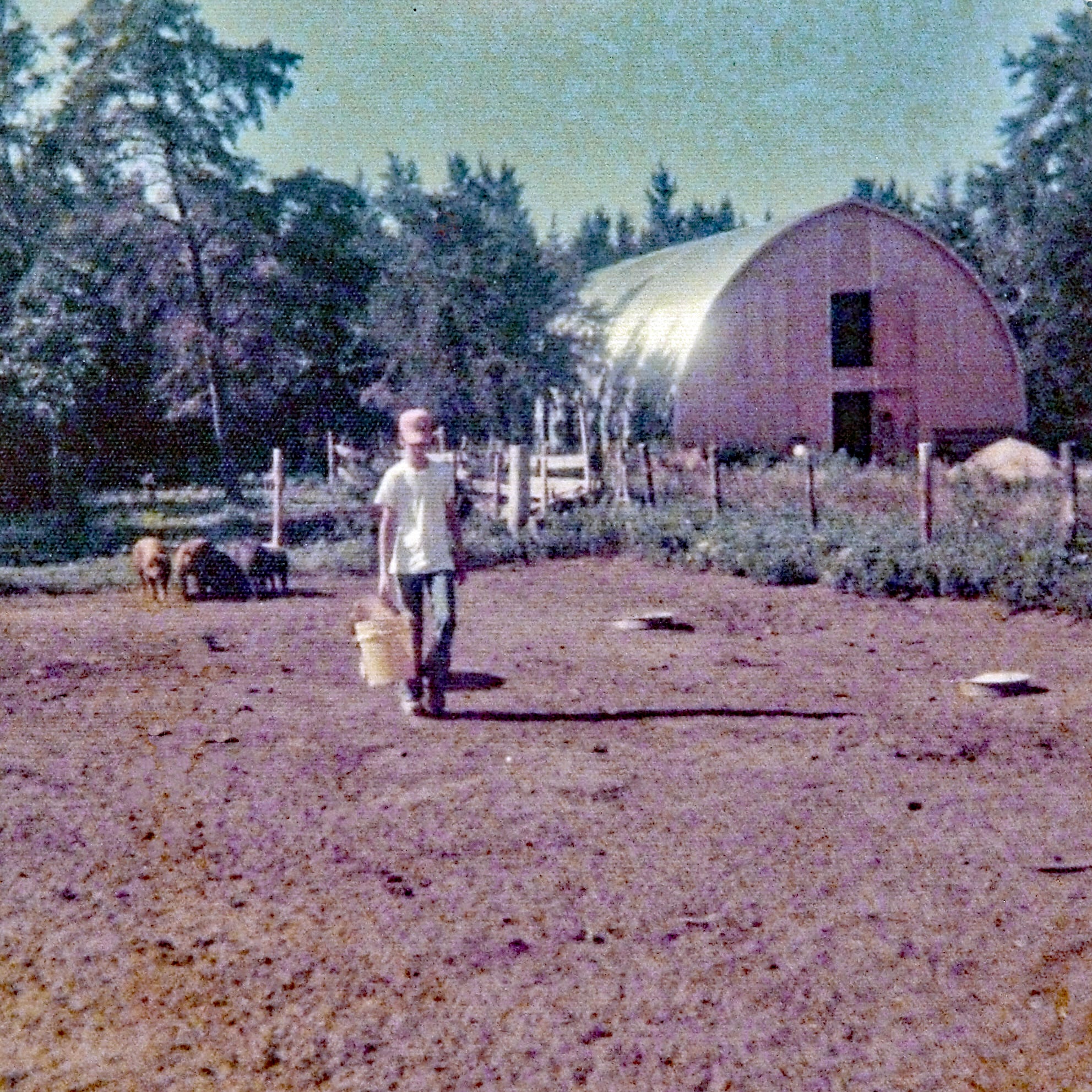
We farmed quite a number of hogs back in the day. The core was a select team of mama sows. With the help of a busy boar or two, these sows produced hundreds of feeder pigs, which we sold once they were thirty to forty pounds.
Those feeder pigs started off as cute exact miniatures. Their petite oink-oink sounded more like nerk-nerk.
Outside of feeding time and those times of panic or fight, the regular oinks, oofs, and grunts in the hog pens and pastures are relatively serene.
Calling Hogs
Now let me tell you about when it was us humans’ turn to make some noise and to holler-in the hogs. Let’s head to the edge of the hog pasture to do some hog calling.
In the field east of the pig barn, the herd of sows and a couple of boars are grazing, chomping, smacking, and rooting. These porkers are peacefully being pigs a few hundred yards away, near the forest fence.
By the barn, we let out a loud hog call. Sooo-ey! Pig-eeeh! Some moments of nothing as sound travels across the pasture. When the call first reaches them, the swine raise their heads and freeze, processing the sounds. Now they are alert and listening.
We then let out another call. Soo-ey! Wooo-hah! Pig-pig-pig-eee-yah!
You have probably heard about hog-calling contests. We never entered any of those contests, but I think we were pretty good. I have heard some champions via online videos, but I think my dad, one or two of my brothers, or I could have easily held our own in such a contest.
We were also accomplished cattle callers. You know, the “Come, Bossy”—which is actually rendered more like “Kuh-bah-see!”
And, we could call in—with our trills, flutter-tonguing, yodels, and volume—a throng of cats from out of the nooks and crannies all over the farm.
I will let you in on a secret about hog calling: It does not matter to the hogs what you say; just let loose with some loud whooping, and they will come. But it’s decorous to keep some traditional flavor in your wahoos and yippees.
Anyway, once our calls settle into the passel of pig brains, they let out an oof-oof, then bolt toward us like an attacking horde, bowling for the barn in their rocking-gallop, ears a-flopping.
We let out a few more sooeys, hoots, yips, and yowls.
These final calls are partly to cheer on the hogs. But these reprises are also because we are caught up in the delight of the calling itself and in the thrill of seeing a herd of Sus domesticus hurtling for home, and slop.
I enjoyed all the sounds and hollers -- and this too " . . . fed fast and quieted quick . . ."